

OPEC+ is cranking up oil supply into a weak market. It’s tried this strategy before, and it backfired
OPEC+ is once again charging headfirst into a market share war—a strategy that has repeatedly ended in disaster. Despite weak global demand, falling prices and rising output from non-OPEC countries, the cartel has chosen to flood the market. History shows this tactic rarely ends well for OPEC+ or oil producers worldwide, including Canada.
OPEC+, a group of major oil-exporting countries led by Saudi Arabia and Russia, works together to manage global oil supply and influence prices. Its decisions have far-reaching consequences for the global energy market—including for Canadian oil producers.
Last Saturday, eight leading members of OPEC+ announced, after a virtual meeting, that they would increase production by 548,000 barrels per day starting in August. That is significantly more than the group’s recent additions of 411,000 bpd, and it puts them on track to fully unwind their previous 2.2 million bpd in cuts a full year ahead of schedule.
It is a bold move, but it comes at a questionable time.
There is little geopolitical premium built into current oil prices, and the global market is already oversupplied. Brent crude futures are down more than six per cent so far this year. Analysts estimate inventories have been climbing by a million barrels per day in 2025 due in part to cooling demand in China and rising output from countries outside OPEC.
S&P Global Commodity Insights forecasts a supply surplus of 1.25 million barrels per day in the second half of the year. Brent crude stood at about US$68 per barrel on Friday, but S&P says it could fall to between US$50 and $60 later this year and into 2026. West Texas Intermediate, the U.S. benchmark, is also at risk of dropping below US$50 per barrel.
Canada is the world’s fourth-largest oil producer, with most of its output coming from Alberta’s oil sands. Though Canadian producers have higher costs than some OPEC+ members, their innovation and access to U.S. markets have made them increasingly competitive.
While the seasonal demand boost might justify a modest increase, OPEC+, especially Saudi Arabia, appears primarily motivated by market share concerns. With U.S. shale and countries like Canada, Kazakhstan and Guyana gaining ground, the cartel is falling back on its old tactic of flooding the market to squeeze out competitors.
Some observers, including Stanley Reed in The New York Times, have suggested that the move may be designed to please U.S. President Donald Trump, who “has made courting Saudi Arabia and regional allies like the United Arab Emirates a priority of his foreign policy.” But even geopolitical gamesmanship has not shielded OPEC+ from the consequences before—and likely will not this time either.
Back in 2014, fed up with the U.S. shale boom, OPEC opened the taps. The goal was to drive prices low enough to force out higher-cost producers. Instead, oil plunged into the US$30 range. According to the World Bank, the 70 per cent drop during that period was one of the three biggest oil crashes since the Second World War and the most prolonged since the supply-driven collapse of 1986. Saudi Arabia’s respected oil minister, Ali Al-Naimi, lost his job in the aftermath.
Then, in April 2020, as the COVID-19 pandemic loomed, OPEC and Russia launched a production war that sent oil prices into freefall, briefly into negative territory. Trump had to broker a ceasefire to rescue the U.S. shale industry, forcing Riyadh and Moscow to pull back. Both sides suffered significant economic damage.
For Canada, especially Alberta, the current fallout could be severe. The province is home to most of the country’s oil sands production. Cheaper global crude undercuts Canadian prices, squeezes royalty revenues, chills investment and puts jobs at risk across Canada. And this comes as governments are already grappling with fiscal pressures.
The oil market does not reward short-term thinking. If OPEC+ continues down this road, history suggests the outcome will be painful for them and the rest of us.
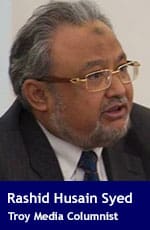
Toronto-based Rashid Husain Syed is a highly regarded analyst specializing in energy and politics, particularly in the Middle East. In addition to his contributions to local and international newspapers, Rashid frequently lends his expertise as a speaker at global conferences. Organizations such as the Department of Energy in Washington and the International Energy Agency in Paris have sought his insights on global energy matters.
Explore more on OPEC, Energy sector, Canadian economy, World economy
The views, opinions, and positions expressed by our columnists and contributors are solely their own and do not necessarily reflect those of our publication.
Troy Media empowers Canadian community news outlets by providing independent, insightful analysis and commentary. Our mission is to support local media in helping Canadians stay informed and engaged by delivering reliable content that strengthens community connections and deepens understanding across the country.

