
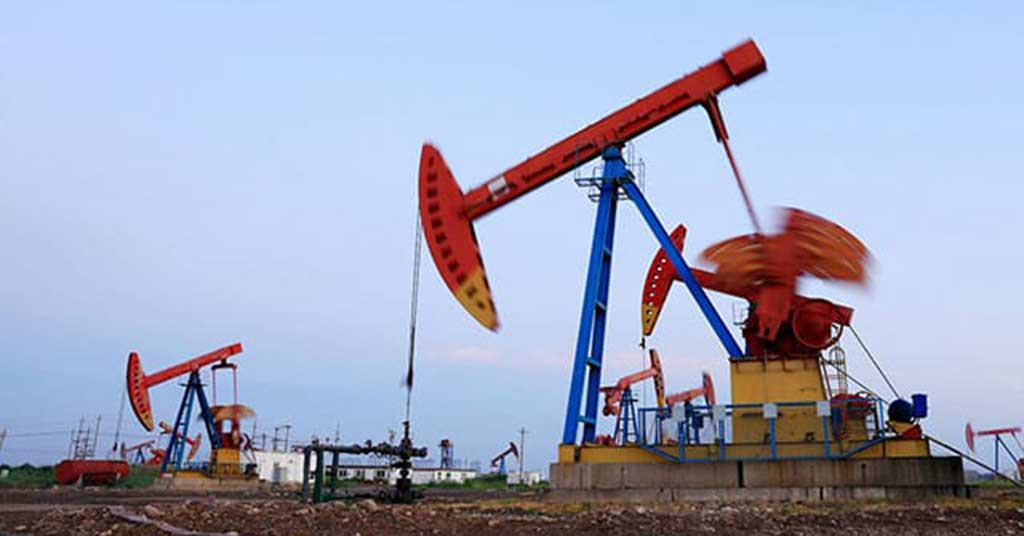
Short bursts of optimism can’t hide the reality that oil is flooding the market while demand is softening

Oil prices ticked up Monday on talk of renewed U.S.-China trade negotiations. But that blip is a sideshow. The fundamentals point in one direction: the world is swimming in crude, and the market is heading for a glut.
Prices briefly rebounded after last week’s steep losses, when both Brent and West Texas Intermediate, the main global and North American benchmarks, fell to their lowest levels since May on fears U.S. President Donald Trump might cancel a meeting with Chinese President Xi Jinping and escalate tariffs.
For Canadians, the stakes are high. Crude prices affect what we pay at the pump, drive government revenues through royalties and taxes, and shape the economic fortunes of Alberta and other oil-producing provinces. A glut doesn’t just punish producers—it squeezes public budgets, threatens jobs and ultimately hits household finances. Cheaper gasoline offers some relief, but Canada’s reliance on energy exports to the United States means the economy cannot shrug off a global oversupply.
The provincial impact is especially stark. Alberta depends heavily on royalties to balance its books, and Saskatchewan and Newfoundland also rely on oil and gas to fund programs. When prices slump, those governments are quickly forced into deficit. At the federal level, weaker energy prices mean less corporate and personal income tax, while a lower Canadian dollar makes imports more expensive.
This vulnerability matters because oversupply is the real story. OPEC+, the Organization of the Petroleum Exporting Countries and its allies, including Russia, added 630,000 barrels a day in September, swelling inventories. Russia is also pushing production to the limit, with August output just shy of its OPEC+ quota. As the world’s second-largest exporter, its extra barrels crowd the market further.
Major forecasters are blunt. The International Energy Agency warns global stocks will rise sharply in the second half of 2025 as supply outpaces demand. Goldman Sachs expects Brent to average US$56 next year. Citigroup, while noting uncertainty, says consensus is increasingly bearish for both crude and natural gas. Together, they paint a consistent picture: supply is set to outstrip demand.
The data back up their claims. Bloomberg reports oil benchmarks are down 10 per cent this year, with consecutive monthly losses in August and September. Vortexa data show a record 1.2 billion barrels of crude currently in transit on the world’s oceans, the highest since at least 2016. China has absorbed much of the excess through stockpiling, but that cannot continue indefinitely.
On top of market fundamentals, geopolitics are shifting as well. The ceasefire between Israel and Hamas reduced concerns about a broader Middle East conflict, undercutting one of the few remaining bullish factors in the market. The region supplies roughly a third of the world’s crude, and its shipping lanes, particularly the Strait of Hormuz, remain critical chokepoints. Meanwhile, the Ukraine-Russia war has disrupted energy flows but also pushed Moscow to pump more to fund its war effort, adding to the current oversupply.
Not everyone sees trouble. OPEC projects demand will climb by 1.3 million barrels per day this year and grow further in 2026. ExxonMobil argues oversupply is temporary, with emerging economies driving demand in the medium term. Its chief executive, Darren Woods, warns that under-investment in oil and gas could eventually tighten markets. But even OPEC admits inflation, high debt and monetary tightening, all factors that weigh on demand, could slow growth.
Looking further ahead, the outlook is just as unsettled. Renewables and electric vehicles are growing, but they are not yet displacing oil demand on a global scale. That leaves Canada caught in the middle—still tied to crude markets while arguing over how quickly to shift its energy mix. A glut now may drag prices lower, but it could also choke off the investment needed if demand holds strong later.
Optimists may point to long-term demand growth. But the weight of evidence points the other way. Supply is climbing, inventories are swelling and the political risk premium is shrinking.
Investors can cling to short-term rallies and headlines. The reality is that crude is sliding into oversupply—and Canada must brace for the fallout.
Toronto-based Rashid Husain Syed is a highly regarded analyst specializing in energy and politics, particularly in the Middle East. In addition to his contributions to local and international newspapers, Rashid frequently lends his expertise as a speaker at global conferences. Organizations such as the Department of Energy in Washington and the International Energy Agency in Paris have sought his insights on global energy matters.
Explore more on Energy sector, Canadian economy, World economy, OPEC
The views, opinions, and positions expressed by our columnists and contributors are solely their own and do not necessarily reflect those of our publication.
Troy Media empowers Canadian community news outlets by providing independent, insightful analysis and commentary. Our mission is to support local media in helping Canadians stay informed and engaged by delivering reliable content that strengthens community connections and deepens understanding across the country.

